Clusters one and two: what Ukraine has already opened in its EU talks
October 5, 2026.
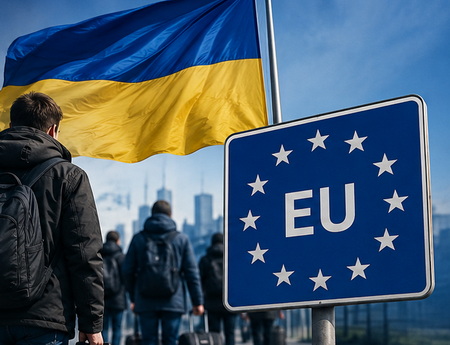
Accession talks with the European Union do not run as a single list of 35 chapters. They run in six clusters. A cluster is opened by all 27 member states, unanimously, at an intergovernmental conference. Opening it does not confer membership and does not admit business to the single market. It records the gaps and the conditions Kyiv must close before a chapter can be provisionally closed.
Cluster 1. Fundamentals
It was opened on 15 June 2026 in Luxembourg, after all members agreed on 12 June. It covers chapters 23 (judiciary and fundamental rights), 24 (justice, freedom and security), plus public procurement, statistics and financial control. It also covers horizontal issues: democratic institutions, public administration reform and the economic criteria.
This cluster is opened first and closed last. The pace of the whole accession depends on it. On chapters 23 and 24 the EU sets interim benchmarks: until they are met, the other chapters cannot be provisionally closed. For Ukraine that means courts, prosecutors, anti-corruption bodies and access to justice, not a political declaration.
Cluster 2. Internal market
It was opened in July 2026. The next day Ursula von der Leyen arrived in Kyiv. It covers the free movement of goods, services, capital and people, technical barriers, company law, intellectual property and the market-rules side of competition. Opening it does not give a Ukrainian firm access to the EU. It sets the directives and requires capable control bodies: customs, market surveillance, corporate law.
Unlike Fundamentals, the internal market is measured not by political will but by alignment of rules and the ability to apply them. The drone agreement signed in the same days does not belong to this cluster. It is a separate defence-industry track.
What follows
By October 2026 two of the six clusters are open. The other four are held up by Hungary’s position and by the law on education in minority languages. June and July produced a frame and a first sectoral package. They did not produce a calendar through the end of the year, and they did not replace a report on the courts or on internal-market directives. The next substantive step is not a new formula about a “strategic choice”. It is the opening of the third cluster and a public check of the conditions Ukraine has already accepted on the first two.
|